Common Concrete Damages and How Our Coatings Solve Them
.png)
Concrete is one of the most durable building materials used in residential and commercial construction. It’s commonly used for driveways, patios, garages, walkways, and pool decks because of its strength and longevity. However, despite its durability, concrete is not immune to damage.
Over time, environmental exposure, moisture, heavy traffic, and natural aging can cause concrete surfaces to deteriorate. Cracks, stains, and surface wear can affect both the appearance and structural integrity of your concrete.
The good news is that many of these problems can be addressed with professional concrete coating systems, which restore and protect concrete while improving its durability and appearance.
In this guide, we’ll explore the most common types of concrete damage and how modern coating systems can solve them.
Why Concrete Gets Damaged Over Time
Concrete may appear solid and permanent, but it is actually a porous material. This means it can absorb moisture, chemicals, and debris from the environment.
Several factors contribute to concrete damage, including:
- Weather exposure
- Moisture penetration
- Freeze-thaw cycles
- Heavy vehicle or foot traffic
- Chemical spills and stains
- Poor original installation
Over time, these conditions can lead to visible and structural issues that require restoration.
Cracks in Concrete Surfaces
Cracking is one of the most common types of concrete damage. Cracks can appear in driveways, patios, garage floors, and walkways.
Some cracks are minor and cosmetic, while others may indicate underlying issues.
Common Causes of Concrete Cracks
Concrete cracks can develop due to:
- Temperature changes causing expansion and contraction
- Ground movement beneath the slab
- Heavy loads or vehicle traffic
- Improper curing during installation
Even small cracks can allow water to enter the surface, which may cause larger structural problems over time.
How Coatings Solve the Problem
Professional concrete coating systems often include crack repair materials and flexible coating layers that help seal and protect the surface.
These coatings:
- Fill and seal minor cracks
- Prevent water penetration
- Reduce future cracking
- Strengthen the surface
This helps extend the life of the concrete while restoring its appearance.
Surface Stains and Discoloration
Concrete surfaces frequently develop stains from oil, grease, chemicals, and everyday use.
This is especially common in areas such as:
- Garage floors
- Driveways
- Outdoor patios
- Commercial spaces
Because concrete is porous, these substances can penetrate the surface and leave permanent discoloration.
How Coatings Solve the Problem
Before applying coatings, professionals typically grind and prepare the surface, removing stains and contaminants.
Once cleaned, a protective coating is applied that:
- Seals the concrete surface
- Prevents future staining
- Creates a smooth, uniform appearance
This process restores the concrete and keeps it looking clean and well-maintained.
Concrete Spalling and Surface Flaking
Spalling occurs when the surface layer of concrete begins to flake, chip, or peel away.
This problem is often caused by:
- Moisture entering the concrete
- Freeze-thaw cycles
- De-icing chemicals
- Poor surface finishing
Spalling can make concrete surfaces look rough, damaged, and unsafe.
How Coatings Solve the Problem
Concrete coatings help address spalling by:
- Repairing damaged areas
- Reinforcing the surface
- Applying protective layers that prevent moisture penetration
Once coated, the surface becomes smoother, stronger, and more resistant to further damage.
Moisture Damage
Water is one of the biggest threats to concrete surfaces. When moisture enters concrete, it can cause:
- Cracking
- Mold growth
- Surface deterioration
- Structural weakening
Moisture problems are particularly common in basements, garages, patios, and pool decks.
How Coatings Solve the Problem
High-quality concrete coatings create a protective barrier that seals the concrete and blocks moisture penetration.
This barrier helps:
- Protect the surface from water damage
- Prevent mold and mildew growth
- Improve long-term durability
By keeping moisture out, coatings significantly extend the life of the concrete.
Worn and Dull Concrete Surfaces
Over time, heavy traffic and environmental exposure can make concrete look worn, faded, and unattractive.
This is especially noticeable in:
- Garage floors
- Walkways
- Driveways
- Commercial floors
Even when the concrete is structurally sound, the appearance may suffer.
How Coatings Solve the Problem
Concrete coatings restore the surface while adding decorative finishes that improve aesthetics.
Modern coating systems offer:
- Gloss or matte finishes
- Decorative flake systems
- Custom colors and textures
- Slip-resistant surfaces
These upgrades transform ordinary concrete into a clean, modern, and visually appealing surface.
How Professional Concrete Coatings Work
Concrete coating systems are designed to repair, protect, and enhance existing concrete surfaces.
The typical process includes several steps:
- Inspection of the existing concrete
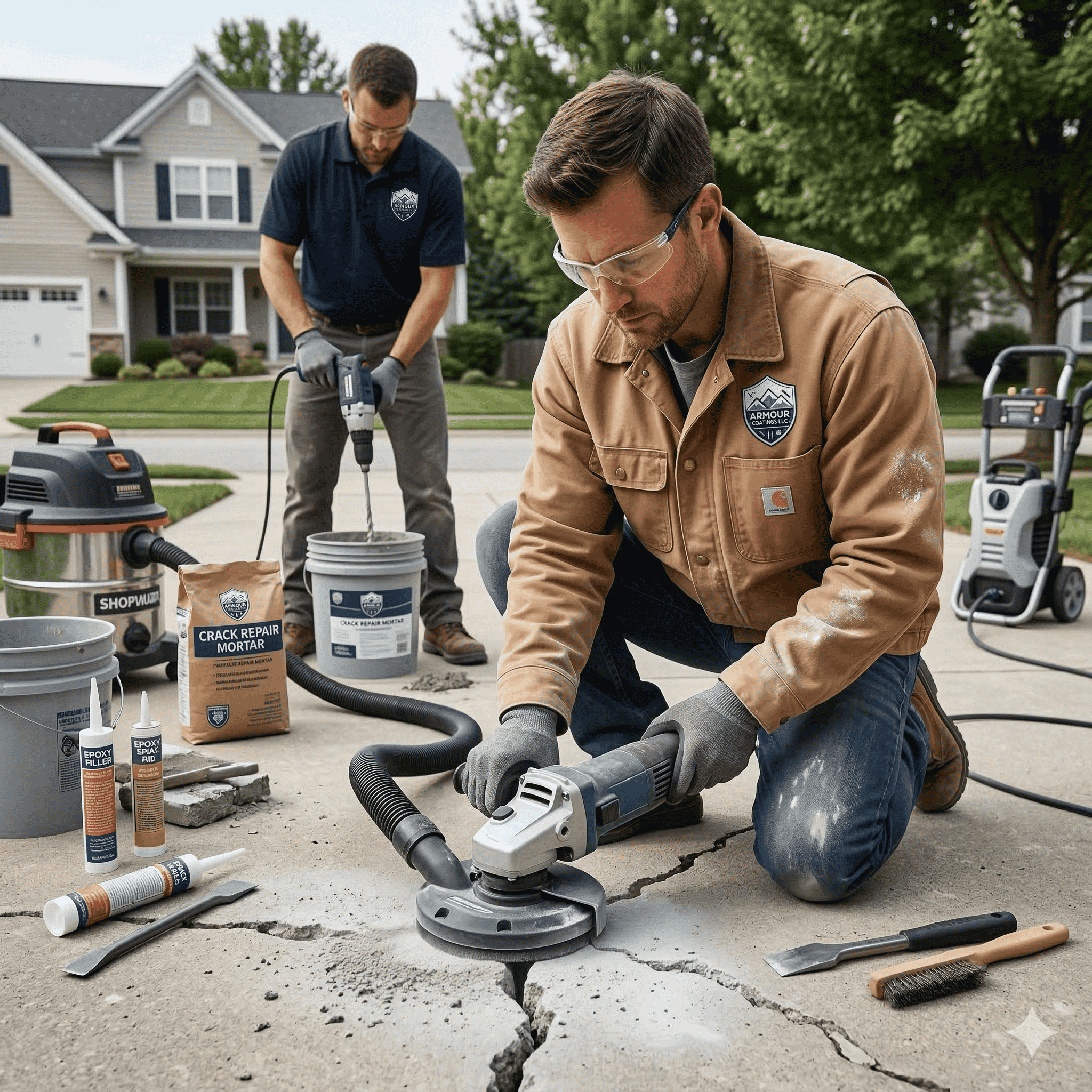
- Surface grinding and preparation
- Repairing cracks and surface damage
- Applying primer and base coatings
- Installing decorative or protective layers
- Sealing the surface for durability
This process ensures the coating properly bonds to the concrete and provides long-lasting performance.
Benefits of Installing Concrete Coatings
Professional concrete coatings offer many advantages for homeowners and businesses.
Extended Surface Lifespan
Coatings protect concrete from environmental damage and daily wear, helping it last much longer.
Improved Appearance
Decorative finishes allow homeowners to customize their concrete surfaces with modern designs and colors.
Increased Safety
Many coating systems include slip-resistant textures, making them safer for areas such as pool decks and patios.
Easier Maintenance
Coated surfaces are easier to clean and maintain compared to untreated concrete.
When Should You Consider Concrete Coatings?
Concrete coatings are a great option when your concrete is structurally sound but showing signs of surface damage or wear.
You may want to consider coatings if you notice:
- Minor cracks
- Stains or discoloration
- Surface flaking
- Dull or worn finishes
- Moisture exposure
Addressing these issues early can help prevent more serious damage and costly repairs later.
Final Thoughts
Concrete is built to last, but it can still develop problems over time due to weather exposure, moisture, and daily use. Fortunately, many common concrete issues can be repaired and prevented with modern concrete coating systems.
By sealing the surface, repairing damage, and adding durable protective layers, coatings help restore the appearance of concrete while extending its lifespan.
Whether you’re dealing with cracks, stains, moisture damage, or worn surfaces, professional coatings can transform old concrete into a strong, attractive, and long-lasting surface.
✔ With the right restoration and coating system, damaged concrete can become a durable and visually appealing part of your home again.
Book an Appointment to learn more: